This is an update to a column we shared a few weeks ago. One of the great advantages of auctions surprises people: when an object’s value or authorship is uncertain, auctions are the great equalizer.
And recently a Tampa woman visited us with many heirlooms she wished to sell. We bought everything, but one small piece stopped Katrina and me in our tracks.
It was a sash: worn, fragile, and in rather poor condition. Beads were loose and threads were failing. Yet despite the damage, the piece was striking, bold and clearly ancient. Unmistakably Native American, at first glance we thought Southeastern, perhaps Choctaw. What made it particularly intriguing was a small silver medallion engraved with a name and the date 1810, extraordinarily early for a beaded Native American textile.
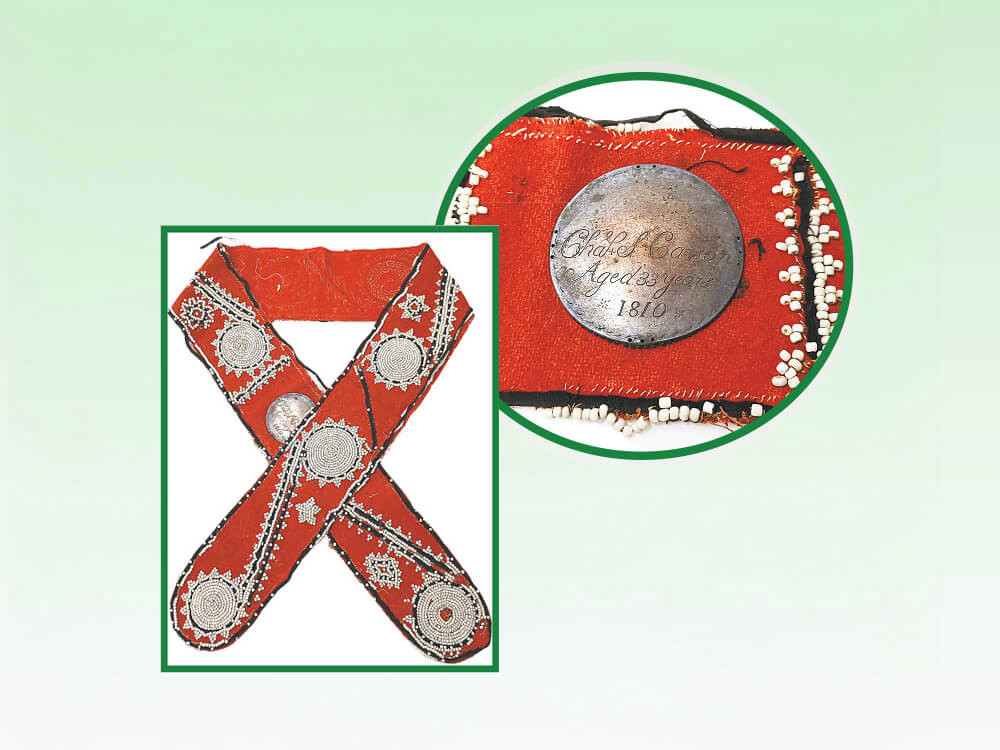
The more we examined it, the more uncertain we became. Was it Southeastern? Southwestern? Could the medallion have been added later? Rather than risk making a poor offer (either too low or too high) we suggested the great equalizer: auction. When knowledgeable collectors compete, the market itself determines value.
We catalogued the sash with a modest estimate to encourage bidding and contacted more than 7,000 Native American collectors in our database, several museums and scholars.
The result surprised us and made our Tampa customer very happy. Despite its condition, spirited bidding between knowledgeable buyers made the hammer on the poor-condition sash fall at $7,000.
The winning bidder turned out to be a noted scholar and museum director. After the sale he shared his view that the sash was likely Cherokee, possibly Southeastern-influenced, and historically important.
If the sash had been in excellent condition, it might have brought five times that amount.
Our client, who nearly dismissed the worn heirloom as simply an old family curiosity, was thrilled.
And it proved once again an important lesson: When certainty is elusive, auction often reveals the true value better than any single expert opinion.
The buyer shared my curiosity as to who Mr. Carson was, and we still don’t know